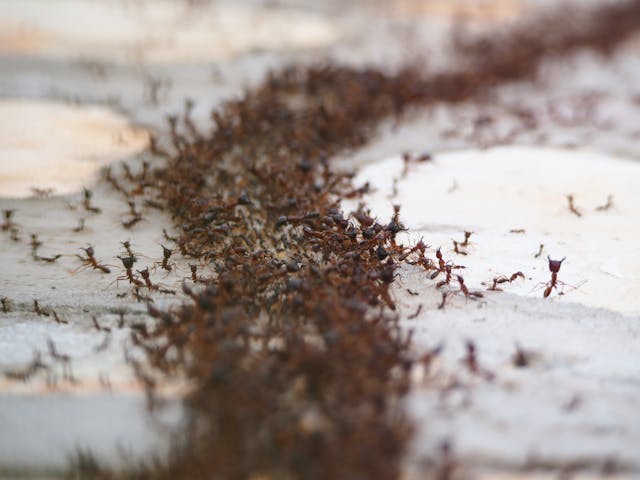
Carpenter ants are among the most destructive household pests found in Toronto. Unlike termites, they do not eat wood for nutrition. Instead, they excavate tunnels inside damp or weakened wood to create nesting galleries. Left untreated, a growing colony can damage structural components of a home and spread into multiple satellite nests.
Many homeowners search for inexpensive DIY solutions before calling a professional. One of the most common recommendations online is borax. While borax can kill ants under certain conditions, its effectiveness against carpenter ants is often misunderstood. Before relying on this household product, it is important to understand how carpenter ant colonies function and why complete elimination is often far more challenging than simply killing the ants you see.
What Is Borax?
Borax, also known as sodium borate, is a naturally occurring mineral that has long been used in household cleaning products and laundry detergents. When mixed with sugar or another sweet food source, it can act as an ant bait.
Worker ants consume the mixture and carry portions back to the colony. The slow-acting nature of borax allows some ants to share it with nestmates before dying, making it potentially effective against certain ant species.
However, carpenter ants behave differently from many common household ants, making borax much less reliable as a complete solution.
Does Borax Work on Carpenter Ants?
The short answer is yes, but only under limited circumstances. Borax may kill some worker carpenter ants if they are attracted to the bait. Unfortunately, eliminating a few workers rarely solves the infestation.
A mature carpenter ant colony can contain thousands of workers along with queens, brood, and multiple satellite nests. The workers you notice inside your home represent only a small percentage of the entire colony.
If the queen survives, the colony continues producing new workers, allowing the infestation to persist.
Why Borax Often Fails
Several factors limit the effectiveness of borax against carpenter ants.
Carpenter Ants Have Changing Food Preferences
Carpenter ants do not always seek sugary foods. During some stages of colony development, they prefer protein-rich foods such as insects or greasy materials. A sugar-based borax bait may simply be ignored.
Professional pest management often uses multiple bait formulations depending on the ants’ seasonal feeding habits.
Colonies Can Have Multiple Nests
One of the biggest challenges with carpenter ants is that they frequently establish satellite nests. The primary colony may be located in a tree stump, damaged tree, fence post, or another outdoor location, while satellite colonies develop inside the home.
Even if borax affects one portion of the colony, additional nests may remain completely untouched.
Worker Ants Are Replaceable
Worker ants forage for food, protect the colony, and care for developing larvae. Killing dozens or even hundreds of workers does little if the queen remains healthy and continues laying eggs.
Effective carpenter ant elimination requires targeting the entire colony rather than simply reducing visible activity.
When Borax Can Help
Borax may have value in very small infestations or as a temporary monitoring tool. For example, placing bait near active trails can help homeowners confirm carpenter ant activity or temporarily reduce the number of foraging workers.
However, if carpenter ants are regularly appearing indoors or winged ants have been spotted inside the home, the infestation has likely grown beyond what a household bait can manage. This is particularly true for older homes where moisture damage creates ideal nesting conditions.
Signs You Have a Larger Carpenter Ant Problem
Professional inspection is recommended if you notice any of these warning signs:
- Large black ants consistently appearing indoors.
- Winged carpenter ants emerging inside the house.
- Rustling or faint scratching sounds inside walls.
- Small piles of wood shavings (frass) beneath wooden structures.
- Moisture-damaged wood around windows, roofs, decks, or bathrooms.
- Ant activity increasing during spring or early summer.
These signs often indicate that an established colony is already nesting within or near the structure.
Why Carpenter Ants Are Common in Toronto
Toronto’s seasonal weather creates excellent conditions for carpenter ants. Snow, heavy spring rain, roof leaks, clogged gutters, and poor drainage can introduce moisture into wooden structures. Carpenter ants are strongly attracted to damp or decaying wood because it is easier to excavate.
Common nesting locations include:
- Window frames
- Roof eaves
- Deck supports
- Porch columns
- Crawl spaces
- Basements
- Wall voids
- Garages
- Tree stumps near the home
Ignoring the infestation allows colonies to expand into additional areas of the property over time.
Why Professional Treatment Is Usually More Effective
Successful ant carpenter control in Toronto focuses on locating the actual nest instead of treating visible ants alone.
Professional technicians typically begin with a detailed inspection to identify:
- Active foraging trails
- Entry points
- Moisture problems
- Satellite nests
- Parent colonies
- Structural conditions encouraging infestation
Treatment may include targeted baiting, residual insecticides applied directly into nesting areas, dust treatments inside wall voids, and recommendations to eliminate moisture sources that attract carpenter ants in the first place. Because every infestation differs, customized treatment generally provides better long-term results than relying on a single DIY product.
Preventing Future Carpenter Ant Infestations
Reducing moisture remains one of the most important preventive measures.
Homeowners should:
- Repair leaking roofs and plumbing.
- Clean gutters regularly.
- Keep firewood away from the foundation.
- Remove dead trees and old stumps.
- Seal cracks around utility lines and windows.
- Trim tree branches that touch the house.
- Replace water-damaged wood promptly.
- Store food in sealed containers and clean spills quickly.
Routine maintenance makes your property significantly less attractive to carpenter ants.
Should You Try Borax First?
If you’ve seen only one or two carpenter ants, using borax bait may provide limited short-term results. However, recurring carpenter ant sightings usually indicate a larger hidden colony that requires a comprehensive treatment plan. Waiting too long can allow additional satellite nests to develop and increase structural damage.
For most established infestations, professional ant carpenter control in Toronto offers the highest likelihood of eliminating the colony completely instead of temporarily reducing visible activity.
Why Choose Us for Carpenter Ant Control
We understand that carpenter ant infestations require far more than surface treatments. Our team performs detailed inspections to locate active nests, identify the conditions attracting carpenter ants, and apply targeted treatments designed to eliminate the colony at its source. We also provide practical recommendations to help prevent future infestations, giving homeowners throughout the Greater Toronto Area a dependable, long-term solution instead of a temporary fix.