Wildlife intrusions rarely arrive with a fixed price tag. A raccoon in the attic, a skunk under the deck, or squirrels nesting in a soffit each demand a different scope of work, and that scope, not the species alone, is what determines the final invoice. For Toronto homeowners weighing quotes, understanding what drives wildlife removal cost helps separate a fair estimate from an inflated one, and clarifies why two companies can quote very different numbers for what looks like the same problem.
What Determines Wildlife Removal Cost in Toronto
Species and behavior
Raccoons and squirrels are the most common calls in Toronto, and their removal is generally more predictable than bats or birds, which require specialized handling due to provincial protections and colony behavior. Skunks denning under decks or porches typically involve a more contained trapping process, while bat colonies often require an exclusion-only approach timed around maternity season restrictions, since removal during that window is prohibited under Ontario wildlife regulations.
Scope of entry points
A single, easily accessed entry point costs far less to seal than a property with multiple compromised areas like damaged fascia, an open roof vent, and a gap under a chimney flashing, for example. Technicians price exclusion work based on the number of points requiring galvanized mesh, vent guards, or steel flashing, not a flat per-visit rate.
Inspection and diagnostic work
Most reputable providers begin with a paid or complimentary inspection to identify active entry points, nesting locations, and the extent of the problem before quoting a final price. Attic and crawl space access, roof height, and whether cameras or thermal tools are needed to locate a den all factor into this stage.
Trapping versus one-way exclusion
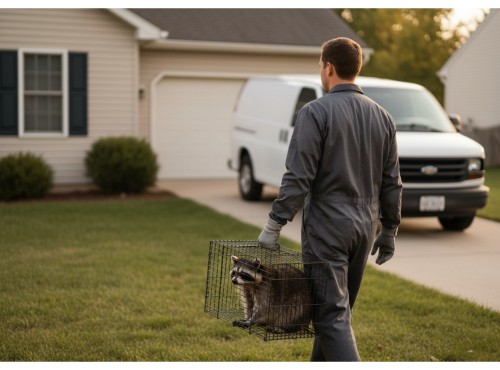
One-way door systems, which let an animal exit but not re-enter, are generally less labor-intensive than live trapping and relocation, which requires monitoring, bait, and multiple site visits until the animal is captured and relocated within regulated distance limits. Jobs requiring live traps for a full litter of young, rather than a single adult, typically take longer and cost more.
Damage repair
Removal is often only part of the invoice. Attic insulation soiled by feces or urine, chewed wiring, and torn ductwork add remediation costs on top of the removal fee. Decontamination and sanitization, particularly after raccoon roundworm exposure risk, is priced separately from the trapping or exclusion work itself.
Warranty and follow-up visits
Companies that back their exclusion work with a written warranty, commonly one year, build the cost of potential follow-up visits into the initial quote. A lower upfront price without a warranty can end up costing more if animals re-enter through a missed or poorly sealed point.
Typical Price Ranges
While every property is different, Toronto homeowners can generally expect the following starting ranges based on job type:
- Single-entry-point exclusion (one raccoon or squirrel, one access point): often the lowest-cost scenario, since it involves one inspection visit, one-way door installation, and sealing.
- Multi-point exclusion with repair: mid-range pricing that reflects additional mesh, flashing, and labor across several access points.
- Full trapping and relocation with a litter present: higher-end pricing due to multiple site visits and monitoring until all animals are safely out.
- Bat colony exclusion: priced at the higher end due to the specialized, seasonally restricted process required by provincial regulation.
- Bird nest removal and deterrent installation (netting, spikes, or wire): varies significantly based on the size of the area being protected.
Because ranges shift with property size, infestation severity, and species, an accurate wildlife removal cost figure should always come from an in-person or photo-based inspection rather than a phone estimate alone.
Questions to Ask Before Accepting a Quote
Homeowners comparing quotes should ask whether the price includes the inspection, whether it covers full exclusion or trapping only, what warranty period applies, and whether repair and decontamination are itemized separately or bundled. A quote that looks lower on paper but excludes repair work or follow-up visits is not necessarily the better deal once the full scope is accounted for.
It’s also worth confirming that the technician is licensed to operate in Ontario and follows the Fish and Wildlife Conservation Act’s relocation and handling requirements. Unlicensed or informal operators may offer lower prices but often skip the documentation and compliance steps that protect homeowners from repeat infestations and liability.
Getting an Accurate Estimate
Because wildlife removal cost depends so heavily on the specific animal, entry points, and damage involved, the most reliable way to budget for the work is a professional on-site assessment rather than a generic quote. A technician who inspects the attic, roofline, and foundation in person can identify issues a phone call would miss, and can price the job based on what the property actually needs rather than a one-size-fits-all rate.
Connect With Us
Since 1998, GTA Toronto Pest Control has helped local homeowners and businesses across the Greater Toronto Area resolve their wildlife challenges. Our team of licensed experts provides humane trapping, exclusion services, and guaranteed repairs to prevent future intrusions. To ensure you pay only for what you actually need, we conduct free on-site assessments and deliver detailed, itemized estimates tailored to your property. Contact us today to schedule your inspection.