


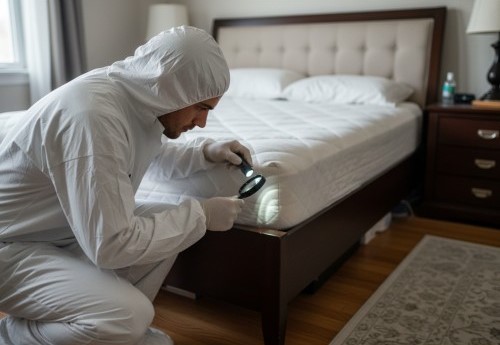
Bite marks are the symptom most people notice first, and the one most likely to mislead them. Mosquito bites, allergic reactions, and other skin irritations are frequently mistaken for bed bug activity, while actual infestations go unaddressed because the physical evidence was never checked. Bites alone are not a reliable diagnostic. Confirming a bed bug problem means looking past the skin and examining the areas where these insects actually live, feed, and reproduce.
Why Bites Are an Unreliable Indicator
Bed bug bites vary enormously from person to person. Some people develop small, itchy welts arranged in a line or cluster, a pattern sometimes called “breakfast, lunch, and dinner”, while others show no visible reaction at all, even with an active infestation feeding on them nightly. Delayed reactions are also common; a bite may not become visibly inflamed for several days, which makes it difficult to connect the mark to its actual cause. Because so many insect bites and skin conditions produce similar-looking welts, relying on bites as the sole sign of a problem leads to both false positives and false negatives.
The Evidence That Actually Confirms an Infestation
Live insects and shed skins
Adult bed bugs are reddish-brown, flat, and oval, roughly the size of an apple seed, though they swell and darken after feeding. Nymphs are smaller and pale yellow, and both stages leave behind shed skins as they mature. This is a clear sign of an active, reproducing population rather than a single stray insect.
Eggs
Bed bug eggs are tiny, white, and often tucked into mattress seams, piping, and the crevices of bed frames. Their presence indicates the infestation has moved beyond a single generation and is actively breeding on-site.
Fecal spotting
Small, dark, rust-colored spots on mattresses, box springs, or nearby walls are bed bug excrement and are among the most consistent indicators inspectors look for, since they persist even after live insects have been temporarily disturbed or hidden.
Blood smears
Faint reddish-brown stains on sheets or pillowcases, caused by an insect being crushed during sleep, often appear alongside fecal spotting rather than in isolation.
Musty odor
A sweet, slightly unpleasant smell in a bedroom is associated with larger, longer-standing infestations, produced by pheromones the insects release. This sign typically only becomes noticeable once the population has grown significantly, which is why it should never be the first indicator relied upon.
Where to Actually Look
Bed bugs cluster within a few meters of where a person sleeps, but they are not confined to the mattress. A proper check includes mattress seams and piping, the joints and screw holes of the bed frame, headboard attachments, baseboards, electrical outlet covers, the folds of curtains, and the edges of carpet along the wall. In multi-unit buildings, a common scenario across Toronto condos and apartments, adjoining units and shared walls also warrant attention, since bed bugs travel along wiring conduits and through minor gaps between units.
Why a DIY Check Often Misses the Problem
Bed bugs are nocturnal and instinctively seek out tight, dark crevices during the day, which makes them easy to miss even during a careful visual sweep. Homeowners frequently either misidentify another insect as a bed bug or overlook eggs and nymphs entirely, since both are small and pale enough to blend into fabric and wood grain. A professional bed bug inspection uses a systematic, room-by-room process to check every one of these hiding points and correctly identify all life stages present, which is what actually determines the right treatment approach rather than guessing based on bite patterns alone.
What Happens After Confirmation
Once an infestation is confirmed, the treatment method depends on the severity and layout of the space. Chemical treatments target insects directly and can be effective for contained infestations, but they typically require multiple visits to catch newly hatched nymphs. A thermal bed bug treatment raises the temperature of the entire room high enough to kill bed bugs at every life stage in a single treatment cycle, which makes it a common choice for heavier infestations or situations where a faster resolution is needed. Many providers offer both options and recommend one over the other based on what the inspection actually reveals.
When to Call a Professional
Any combination of fecal spotting, shed skins, a musty odor, or a live sighting warrants a professional inspection rather than a wait-and-see approach, since bed bug populations grow quickly and become harder to fully eliminate the longer they’re left untreated. Waiting for bites to appear, or trying to self-diagnose based on skin reactions alone, is the most common reason infestations go undetected until they’re already widespread.
About Us
We’ve been Toronto’s trusted name in pest control since 1998. Bed bugs are one of the problems we’re called in for most often, usually after someone has spent weeks second-guessing whether their bites mean anything. Our licensed technicians go through every room systematically, checking seams, frames, and baseboards for the eggs, shed skins, and fecal spotting that bites alone won’t tell you. If you’re not sure what you’re dealing with, a proper bed bug inspection is the fastest way to find out, and we back every treatment plan with a 6-month guarantee.

