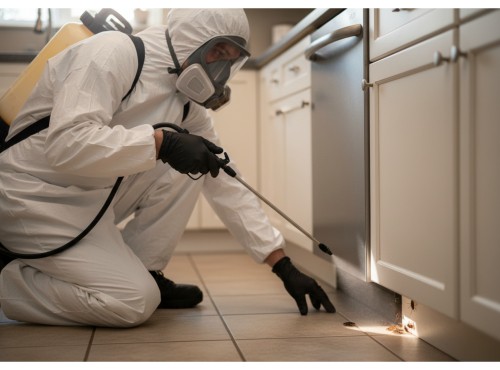
Discovering ants after a professional pest control treatment can be discouraging. Many homeowners expect every ant to disappear immediately, so seeing activity days later often raises concerns about whether the treatment worked. In reality, continued ant sightings are common during the early stages of a successful treatment.
Ant colonies are highly organized and can contain thousands of individuals living behind walls, beneath floors, under concrete slabs, or outside the home. Eliminating an entire colony takes time, and the process involves much more than killing the ants that are visible. Understanding why ants remain active after treatment can help you know what to expect and when it’s time to request a follow-up inspection.
Pest Control Doesn’t Always Produce Immediate Results
Professional ant treatments are designed to eliminate the colony, not simply remove the ants you see crawling across countertops or floors. Many modern treatments rely on slow-acting baits rather than instant-kill sprays. Worker ants collect the bait and carry it back to the nest, where it is shared with other workers, larvae, and, in some cases, the queen.
Because this process takes time, it is completely normal to notice ant activity for several days or even a couple of weeks after treatment. In fact, you may temporarily see more ants than before as workers become more active while gathering bait.
Worker Ants Are Only a Small Part of the Colony
The ants inside your home represent only a fraction of the entire population. Most of the colony remains hidden inside nests that are often impossible to locate without a professional inspection.
A mature colony may include:
- Thousands of worker ants
- One or more queens
- Developing larvae
- Pupae
- Eggs
Until the queen and developing brood are eliminated, worker ants may continue appearing indoors. This is why effective ant control focuses on destroying the colony rather than treating individual ants.
Some Ants Were Away From the Nest
Not every worker ant is present inside the colony at the same time. Some ants may be searching for food outdoors, exploring new foraging routes, or travelling between satellite nests.
These ants eventually return after treatment and become exposed to the bait or treated surfaces. As a result, new ants may continue appearing for several days before the infestation declines.
Large Colonies Take Longer to Eliminate
The size of the infestation plays a major role in treatment time. A small colony may collapse fairly quickly, while a well-established colony containing thousands of ants requires considerably longer.
Certain species, such as carpenter ants, can also maintain multiple satellite nests throughout the property. Each nest must be affected before the infestation is completely eliminated.
Weather Can Increase Ant Activity
Seasonal weather often changes ant behavior. Heavy rain, extreme heat, or sudden temperature changes may force ants to leave outdoor nests and search for new food or shelter indoors.
This increased movement sometimes occurs shortly after treatment, giving homeowners the impression that the infestation has become worse. In many cases, the treatment is still working as intended while environmental conditions temporarily increase visible activity.
Ant Trails May Continue for a Short Time
Ants communicate using chemical scent trails called pheromones. Even after treatment begins, these trails may remain active for a short period.
Worker ants continue following the established path until enough members of the colony are eliminated and the trail gradually disappears. For this reason, pest control professionals often recommend avoiding excessive cleaning around bait stations until the treatment has had sufficient time to work.
Cleaning Too Soon Can Reduce Effectiveness
Many homeowners want to disinfect their kitchens immediately after pest control.
While maintaining cleanliness is important, removing bait or washing treated areas too soon can interfere with the treatment. Professional technicians typically provide instructions about:
- Which areas should remain untouched
- When floors can be washed
- How long bait stations should remain in place
- Which cleaning products to avoid temporarily
Following these recommendations helps maximize treatment effectiveness.
Hidden Entry Points May Still Be Active
Even after the original colony has been treated, ants may continue entering through small openings around the home. Common entry points include:
- Window frames
- Door thresholds
- Foundation cracks
- Utility pipe openings
- Gaps beneath siding
- Roof penetrations
Sealing these access points helps reduce future infestations after treatment is complete.
Food Sources Can Delay Results
Ants are constantly searching for food. If they continue finding crumbs, sugary spills, grease, pet food, or accessible garbage, some workers may ignore professional bait products.
Keeping kitchens, pantries, and dining areas clean encourages ants to consume the treatment rather than alternative food sources. Proper sanitation supports successful pest control services by reducing competing food supplies.
Some Species Require Follow-Up Treatments
Not every infestation can be eliminated in a single visit. Certain ant species develop large, complex colonies or maintain multiple nesting sites across the property.
For this reason, many professional pest control programs include scheduled follow-up visits to:
- Monitor activity
- Replenish bait if needed
- Inspect for new nesting areas
- Confirm the colony has been eliminated
These follow-up appointments are often an essential part of achieving complete control.
When Should You Be Concerned?
Although temporary ant activity is expected, there are situations where additional inspection is recommended. Contact your pest control provider if:
- Ant activity remains unchanged several weeks after treatment.
- Large numbers of ants continue appearing every day.
- New ant trails develop in different areas of the home.
- Winged ants begin emerging indoors.
- You notice signs of carpenter ants damaging wood.
Persistent activity may indicate multiple colonies, untreated satellite nests, or new ants entering from outside.
Supporting Long-Term Ant Prevention
Professional treatment works best when combined with preventive maintenance around your home. Simple steps include:
- Fix leaking pipes and faucets.
- Store food in airtight containers.
- Clean countertops daily.
- Remove standing water.
- Trim vegetation touching the house.
- Seal cracks around windows and foundations.
- Keep firewood away from exterior walls.
- Empty indoor garbage regularly.
These measures make your home less attractive to future ant infestations.
A Complete Approach to Lasting Ant Control
Seeing ants after treatment does not automatically mean the service has failed. In many cases, it is part of the normal elimination process as workers carry bait back to hidden nests. The key is allowing enough time for the treatment to affect the entire colony while following the recommendations provided by your technician.
When ongoing activity continues beyond the expected treatment period, professional reassessment is the best course of action. We provide thorough inspections, customized treatment plans, and reliable follow-up services designed to address infestations at their source instead of simply treating surface activity. If you need dependable ant control Toronto, our team delivers effective solutions tailored to your property. We also offer comprehensive pest control services in Toronto for a wide range of household pests, providing homeowners with lasting protection through proven prevention strategies.