
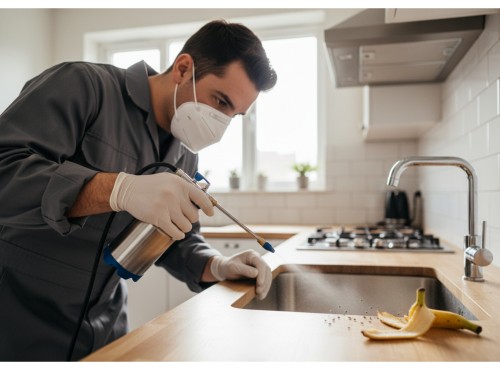
In the compact and diverse urban fabric of Toronto and the Greater Toronto Area, small flying insects hovering around fruit bowls, drains, or refuse bins often indicate the early stages of a deeper sanitation issue. What begins as a simple household annoyance can escalate into a widespread concern for property managers, food-service operators, and pest management professionals (PMPs). The combination of high-density living, year-round indoor heating, and complex waste-handling systems across Toronto buildings provides ideal conditions for the rapid development of insect populations.
Members of the Drosophila group, often called vinegar or wine flies, are active across Ontario throughout the year. Their persistence is reinforced by the city’s varied infrastructure, from century-old restaurants along Queen Street West to modern condominium towers near Yonge and Dundas. Each environment offers unique harborage zones and breeding substrates, from organic debris in floor drains to fermenting waste in service areas.
Local PMPs report that Toronto’s mixed-use properties and shared utility systems amplify infestation risks compared to less densely built regions. Factors such as communal refuse chutes, unsealed plumbing penetrations, and sustained indoor temperatures during winter allow small populations to flourish. Understanding these conditions enables pest control specialists to apply targeted prevention, combining sanitation, exclusion, and environmental management to limit breeding opportunities before infestations spread.
Key Risk Factors in Toronto
- Waste Infrastructure and Density
Multi-use buildings featuring shared refuse systems or exterior dumpsters near intersections such as Queen Street West and Bathurst Street, or around St. Lawrence Market, present continuous breeding potential. Even minor lapses in waste management can support extensive populations. - Food-Service Concentration
Restaurants, cafés, and bars concentrated along Queen Street West, Kensington Market, and other hospitality zones generate organic residues ideal for oviposition. Adult fruit flies are naturally attracted to fermenting sugars and alcohol residues that accumulate around beverage taps or disposal units. - Mild Interior Microclimates
Toronto’s climate control systems keep indoor environments warm throughout winter, enabling uninterrupted fruit-fly life cycles. This constant temperature allows larval development in organic debris to continue while outdoor populations decline. - Interconnected Building Systems
Shared HVAC lines, unsealed plumbing chases, and drain stacks enable adult migration between apartment units. Without effective exclusion, a single untreated unit can reinfest an entire floor.
Biology and Rapid Reproduction
Entomological research cited by the National Pest Management Association (NPMA) confirms that Drosophila melanogaster females can lay up to 500 eggs within a few days. These eggs hatch in roughly 24 hours, with the larval stage maturing to adulthood in under two weeks when environmental conditions remain above 20 °C. In urban kitchens or food-handling areas, this rapid turnover means that a minor sanitation lapse can yield a visible swarm within days.
Health and Food-Safety Implications
Although the general public perceives fruit flies as minor nuisances, pest control professionals recognize their broader implications. Adult flies frequently land on decomposing produce, drains, and refuse bins before contacting food-preparation surfaces. Studies referenced by Health Canada and food-safety audits identify fruit flies as mechanical vectors capable of transferring bacteria such as E. coli and Salmonella.
In Toronto’s restaurant and retail sectors, infestations invite scrutiny from municipal health inspectors, potential citations under food-safety codes, and reputational harm to operators. For pest management firms, failure to achieve lasting control increases service costs and client risk exposure.
Professional Management Framework
For PMPs serving the GTA, successful mitigation requires a structured Integrated Pest Management (IPM) approach rooted in inspection, identification, remediation, and verification.
- Accurate Pest Identification
Misidentification is common. Fruit flies must be distinguished from drain flies or phorid flies through examination of body colour, eye pigment, and swarming behaviour. Adult fruit flies typically measure 2.5 to 4 millimetres, exhibit tan to brown colouring, and gather around fermenting organic matter. - Source and Harborage Site Detection
Inspection focuses on fruit-storage zones, refuse containers, compost bins, and moist organic matter. In Toronto apartments, larvae often breed beneath kitchen sinks or in damp potted soil. PMPs use flashlights and small spatulas to locate decaying residues within drain lips or disposal units. - Structural Assessment
Building inspection must include floor drains, waste chutes, plumbing penetrations, and utility rooms. Toronto’s mixed-use towers often share waste infrastructure that can transmit infestations between tenants. Sealing gaps and applying exclusion work reduces cross-unit migration. - Corrective and Preventive Actions
A coordinated sanitation protocol eliminates fermenting materials, while structural exclusion prevents re-entry. PMPs employ mechanical devices such as fly lights, sticky monitoring boards, and baited traps to reduce adult populations. If chemical intervention becomes necessary, only products registered with a valid Pest Control Products (PCP) number under Health Canada are permissible. Technicians must observe re-entry intervals (REI) and maintain WHMIS documentation. - Monitoring and Verification
Follow-up involves installing monitoring devices near known hot spots to confirm population decline. Data from sticky traps and fly-light catch trays support a trend analysis documenting long-term control.
Case Study: Downtown Residential Tower
A Toronto high-rise near Yonge and Dundas Square reported persistent fruit-fly activity following a renovation that compromised the waste-chute seal. Tenants noted swarming around kitchen counters and fruit baskets. Upon inspection, the PMP identified decomposing organic matter and a leaking drain in the rooftop compactor room. Following waste removal, drain cleaning, and installation of a tamper-resistant monitoring board, adult populations declined within two weeks. This scenario illustrates how high-density living and shared waste infrastructure magnify infestation pressures in urban cores.
Why Professional Response Matters
Attempting control through household remedies or consumer traps seldom resolves infestations at the structural scale found in Toronto properties. Fruit flies exploit multiple micro-sites, beneath refrigeration gaskets, inside mop heads, or in recycling residue, requiring the coordinated intervention of trained technicians.
Certified PMPs apply field-verified methodologies supported by the Canadian Pest Management Association (CPMA) and the Ministry of Natural Resources and Forestry (MNRF). Their treatments adhere to humane and environmentally responsible principles while ensuring regulatory compliance.
Professional response also delivers education, an essential component of sustainable prevention. Technicians routinely provide property-specific recommendations, including moisture-control measures, proper waste handling, and cleaning schedules designed to interrupt breeding cycles before they begin.
Seasonal Activity and Environmental Factors
Fruit-fly prevalence in Toronto correlates with seasonal changes, especially during late summer and early autumn. Warm temperatures accelerate larval development, while outdoor festivals and food markets increase organic waste accumulation.
In colder months, infestations persist within heated interiors, particularly in facilities with floor drains or produce storage. PMPs adapt by shifting focus from exterior exclusion to interior sanitation and humidity management.
| Season | Environmental Condition | Recommended Focus for PMPs |
| Summer | High humidity, open refuse zones, food festivals | Frequent monitoring, rapid waste rotation |
| Autumn | Declining outdoor temperatures, indoor heating begins | Drain inspections, mechanical trapping |
| Winter | Fully indoor populations, reduced ventilation | Moisture control, exclusion of inter-unit migration |
| Spring | Warming trend, reactivation of outdoor waste bins | Structural inspection, preventive baiting |
Cost, Frequency, and Service Structuring
Pest-control service costs in Toronto vary by site complexity, infestation scale, and contract scope.
| Service Type | Frequency | Estimated Annual Range (CAD) | Key Components |
| Residential | One-time + follow-up | 300–600 | Inspection, sanitation, exclusion |
| Small Restaurant | Monthly | 600–900 | IPM plan, monitoring, drain service |
| Large Commercial | Bi-weekly | 900–1500 | Structural remediation, chemical treatments, audit logs |
These figures reflect general industry estimates across the GTA. Service agreements typically include seasonal reviews to recalibrate monitoring thresholds and sanitation performance indicators.
Client Communication and Ethical Standards
Communication between technician and client remains pivotal. PMPs must explain findings transparently, avoiding unnecessary chemical applications when sanitation can achieve equal outcomes. Ethical service aligns with NPMA and CPMA guidelines promoting environmentally responsible methods and humane pest management.
Technicians emphasize that fruit-fly control is a process, not a single treatment. Sustained success depends on client cooperation, documented hygiene routines, and adherence to waste-handling protocols.
Sustained Vigilance through Professional Collaboration
Fruit-fly infestations across Toronto remain a persistent consequence of urban density, continuous waste generation, and favorable interior conditions. However, through integrated pest-management strategies, precise inspections, and ongoing verification, both residential and commercial clients can maintain pest-free environments year-round.
For expert assessment, rapid response, and reliable results throughout the Greater Toronto Area, contact GTA Toronto Pest Control today. Their certified team provides comprehensive inspection, sanitation guidance, and treatment solutions tailored to Toronto’s unique urban environments to help homes and businesses stay clean, compliant, and completely fruit-fly free.
Author Bio: Naeem Choudhry
Pest Control Expert
Naeem Choudhry is a seasoned pest control specialist with over 20 years of hands-on experience. Based in Toronto, he stays up to date with the latest industry best practices and is an active member of the National Pest Management Association of Canada.
Known for his practical tips and outstanding customer service, Naeem frequently hosts community workshops where he educates the public on pest identification, behaviour, and effective control methods. When he’s not out in the field, he shares his expertise through articles, educational events, and community outreach initiatives.
For more insights, follow him on x.com.