
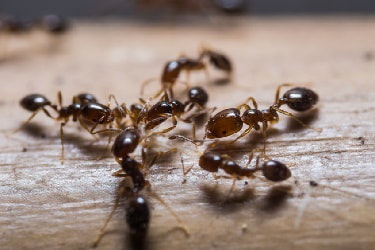
If you’ve ever noticed large black ants suddenly appearing in your home as winter fades, you’re not imagining things. Spring is when carpenter ants seem to show up out of nowhere, and for many Toronto homeowners, it feels like the worst time of year for infestations.
But is spring actually the worst season for carpenter ants, or just the most noticeable? The answer is a bit more nuanced, and understanding it can help you act at the right time.
Why Carpenter Ant Activity Spikes in Spring
Spring marks a turning point in the life cycle of carpenter ants. During winter, colonies remain relatively inactive, hidden deep inside wood, soil, or wall voids where temperatures are stable. But once the weather warms up, everything changes.
Here’s what happens:
- Colonies become active again after winter dormancy
- Worker ants begin searching aggressively for food
- Nest expansion resumes
- Reproductive ants (swarmers) are produced
This sudden increase in activity is why homeowners start noticing ants in large numbers.
It’s Not New It’s Been There All Along
One of the biggest misconceptions is that carpenter ants “arrive” in spring. In reality, they were likely already there.
- Inside damp wood
- Behind walls
- In attics or basements
- Near the home’s foundation
Spring doesn’t create the infestation, it reveals it. As ants begin foraging more actively, they become visible inside your living space.
Spring vs Summer: What’s Actually Worse?
While spring is when most people notice carpenter ants, summer is often when infestations are at their peak.
Spring:
- Increased visibility
- Foraging begins
- Swarmers may appear
- Early-stage detection opportunity
Summer:
- Colonies are fully active
- Nest expansion accelerates
- Damage can worsen
- Satellite colonies may form
So while spring feels like the worst time, it’s actually the best time to catch the problem early before it grows.
Why Toronto Homes Are Especially at Risk in Spring
Toronto’s climate plays a major role in carpenter ant activity. After winter:
- Snow melts and saturates the soil
- Moisture levels rise around foundations
- Wood structures may retain dampness
Carpenter ants are drawn to moisture-damaged wood, making spring conditions ideal for them. Older homes are particularly vulnerable due to:
- Aging wooden structures
- Past water damage
- Poor ventilation in basements or attics
This combination creates the perfect environment for carpenter ants to thrive.
The Role of Moisture After Winter
Spring moisture is one of the biggest triggers for carpenter ant activity. Common issues include:
- Leaks revealed after snowmelt
- Condensation buildup in basements
- Water-damaged window frames or roofing
Damp wood is easier for carpenter ants to tunnel through, which encourages nest expansion. If moisture problems aren’t addressed, infestations can become more severe over time.
Why You Might See Winged Carpenter Ants
Spring is also when many homeowners notice winged ants indoors. These are reproductive ants, and their presence usually means:
- The colony is mature
- It’s preparing to expand
- New colonies may soon form
Seeing winged carpenter ants inside is a strong sign that the infestation is well-established, not new.
Is Spring the Best Time to Take Action?
Absolutely. While activity is more visible, the infestation may still be in a manageable stage.
Acting in spring allows you to:
- Identify the problem early
- Prevent colony expansion
- Reduce long-term damage
- Avoid higher treatment costs later
Waiting until summer or fall often means dealing with a much larger and more complex infestation.
Why Many Homeowners Wait Too Long
It’s easy to dismiss spring ant activity as temporary. Some common assumptions:
- “They just came in because of the weather”
- “It’s only a few ants”
- “They’ll go away on their own”
Unfortunately, carpenter ants don’t disappear – they expand. By the time the problem becomes obvious, it’s often more advanced than expected.
The Importance of Targeted Treatment
Carpenter ants are not like typical household ants.
Because they nest inside wood:
- The colony is often hidden
- Surface treatments are ineffective
- Damage can continue unnoticed
Effective ant carpenter control in Toronto focuses on:
- Locating the nest (or multiple nests)
- Eliminating the queen
- Treating affected wood and surrounding areas
- Addressing moisture issues
Without this approach, the infestation is likely to return.
How to Reduce Spring Ant Activity
While professional treatment may be necessary, there are steps you can take to reduce risk:
- Fix leaks and eliminate moisture sources
- Improve ventilation in damp areas
- Seal cracks around windows and foundations
- Remove rotting wood near your home
- Keep gutters clear and direct water away from the structure
So, is spring the worst time for carpenter ants in Toronto? It’s certainly the most visible time, but not necessarily the most damaging. Spring is when infestations come to light, giving homeowners a critical window to act before things get worse. If you’re seeing signs of carpenter ants, it’s not just a seasonal nuisance, it’s an early warning.
Professional ant carpenter control in Toronto can help you stop the problem at its source, protect your home’s structure, and prevent a much larger issue later in the year. The sooner you act, the easier, and more affordable, the solution tends to be.