
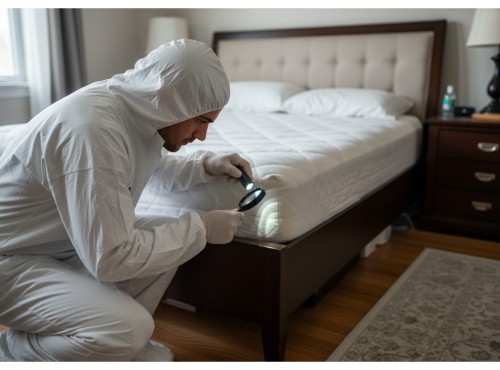
Toronto, Canada’s largest metropolitan region, has seen a marked increase in residential pest activity over the past decade, with Cimex lectularius leading recent reports. This trend has reshaped how city agencies, property managers, and pest management professionals approach infestations in apartments, hotels, and short-term rentals. Once considered rare in the 1980s, these pests have reappeared throughout high-density zones, prompting renewed attention to housing maintenance, tenant education, and inspection protocols.
Urban Hotspots and Contributing Factors
High-traffic corridors such as Yonge and Dundas, Queen and Spadina, and Jarvis and Carlton remain focal points for reported infestations. These areas combine retail, residential, and hospitality spaces with high occupant turnover, creating ideal conditions for pest migration through furniture seams, electrical outlets, and wall voids.
According to Health Canada, growing chemical resistance to certain pyrethroids has made eradication more difficult, especially when do-it-yourself treatments are attempted. The insects’ thigmotactic behavior, or preference for tight spaces, allows them to remain hidden during early stages, requiring trained technicians and targeted inspections for accurate detection.
Broader Impact and Emerging Prevention Focus
Infestations are documented across diverse neighborhoods, from Yorkville condominiums to Queen West heritage homes and university housing downtown. Data from the National Pest Management Association (NPMA) ranks Toronto among the most active urban zones for bed bug activity in North America, a trend driven by travel, housing density, and aging infrastructure.
To address this, local pest management professionals emphasize early reporting, routine inspections, and community awareness as critical components of prevention. Public education programs led by Toronto Public Health and the City of Toronto Bed Bug Management Program continue to promote safe treatment methods and proper tenant preparation, helping residents and building operators respond effectively while minimizing disruption and health risk.
The Role of Professional Surveillance and Early Detection
Professionals recognize that urban pest pressures intensify with density. Bed bugs are efficient hitchhikers, moving through structural voids and utility penetrations between units. Regular visual inspections, crack and crevice surveys, and monitoring boards have become standard operating procedures for high-risk properties. Many pest management professionals also employ threshold monitoring, a practice defined in Integrated Pest Management (IPM), to determine when intervention is required.
Timely detection plays a critical role in limiting spread. Toronto Public Health encourages tenants to contact Toronto 311 or a licensed Pest Management Professional (PMP) as soon as activity is suspected. According to Health Canada’s Pest Management Regulatory Agency (PMRA), early intervention helps prevent pesticide resistance, which can occur when bed bugs are repeatedly exposed to sublethal chemical concentrations.
| Inspection Component | Purpose | Professional Standard |
| Visual Inspection | Locate live insects, eggs, and fecal spotting | Required prior to treatment |
| Monitoring Devices | Detect early activity and gauge infestation level | IPM-based surveillance tool |
| Crack & Crevice Treatment | Target harborage areas for residual application | Must follow WHMIS and REI guidelines |
| Post-Treatment Follow-up | Confirm eradication through reinspection | Conducted by licensed PMP |
This table reflects the structured approach recommended by NPMA and the Canadian Pest Management Association (CPMA), emphasizing measurable, evidence-based service delivery.
Bed Bug Prevalence, Management Resources, and Reporting Responsibilities in Toronto
Toronto continues to face one of the most persistent resurgence cycles of Cimex lectularius in Canada. The combination of dense residential structures, transient housing, and continuous interprovincial and international migration sustains conditions favorable to infestation. Data collected by Toronto Public Health (TPH) show that bed bugs consistently rank among the most frequently reported urban pests in both multi-residential and hospitality environments. Thousands of calls are routed annually through Toronto 311, highlighting the citywide scale of concern and the importance of organized management.
Current Urban Distribution and Contributing Factors
Bed bug concentrations remain highest in neighborhoods with mixed-use buildings and constant human movement. High-traffic intersections such as Yonge Street and Dundas Street, Queen Street and Spadina Avenue, and Jarvis Street and Carlton Street mark the core zones where infestation reports cluster. These locations combine dense residential occupancy with retail, entertainment, and tourism facilities that increase transfer opportunities for hitchhiking insects.
Secondary zones of concern extend west toward Kensington Market and High Park, as well as east toward Church and Wellesley and the Distillery District. These areas feature older building stock with shared walls, communal laundry facilities, and structural voids that can act as migration pathways. Entomologists note that in such environments, cross-attraction between units accelerates the spread of infestations.
The National Pest Management Association (NPMA) attributes the persistence of bed bugs in major Canadian cities to three primary factors:
- Mobility – Frequent travel and relocation facilitate the spread of insects between dwellings.
- Resistance – Bed bugs develop tolerance to commonly used synthetic pyrethroids.
- Structural Connectivity – Shared plumbing and electrical chases enable population expansion between units.
This convergence of conditions explains why the city’s efforts rely heavily on proactive monitoring, Integrated Pest Management (IPM) education, and enforcement of municipal health codes.
Integrated Management Framework and Available Resources
The City of Toronto’s Bed Bug Management Program provides a coordinated system linking public education, inspection support, and professional treatment standards. The program’s resources, developed in cooperation with the Pest Management Regulatory Agency (PMRA) of Health Canada, emphasize safe and effective approaches to eradication.
Professional pest management companies across the Greater Toronto Area (GTA) now employ structured multi-step protocols that integrate thermal, mechanical, and chemical techniques. Below is an outline of the process typically followed by licensed Pest Management Professionals (PMPs):
| Treatment Phase | Description | Regulatory and Safety Standards |
| Inspection and Pest Identification | Comprehensive site assessment using monitoring boards, visual inspection, and pest ID verification. | Conducted under CPMA inspection protocols. |
| Localized Treatment Application | Crack and crevice treatment, vacuum removal, or controlled heat remediation reaching lethal temperatures for all life stages. | Must comply with WHMIS hazard labeling and REI standards. |
| Residual Chemical Control | Use of microencapsulated formulations for long-term protection in high-traffic areas. | Only products with valid Health Canada PCP Numbers may be applied. |
| Post-Treatment Monitoring | Follow-up inspections at 14 and 30 days to confirm complete eradication. | Documentation required under municipal service logs. |
This procedural model reflects national IPM principles and supports Health Canada’s Integrated Pest Management Directive, prioritizing safety, environmental responsibility, and treatment precision.
Advancing Ethical and Effective Bed Bug Control
The persistence of bed bugs across the city underscores a broader challenge in contemporary urban living: balancing mobility, density, and hygiene in shared environments. Through science-based methodologies, regulatory oversight, and active public engagement, Toronto has developed one of Canada’s most comprehensive pest control infrastructures.
If you are dealing with a bed bug infestation or need expert pest management services anywhere in the Greater Toronto Area, contact GTA Toronto Pest Control for a detailed inspection and treatment plan. Their licensed Pest Management Professionals (PMPs) specialize in bed bug eradication, offering heat treatments, residual applications, and follow-up inspections tailored for residential and commercial properties.
Don’t let an infestation spread. Reach out today to GTA Toronto Pest Control to schedule a consultation or request a quote.
Author Bio: Naeem Choudhry
Pest Control Expert
Naeem Choudhry is a seasoned pest control specialist with over 20 years of hands-on experience. Based in Toronto, he stays up to date with the latest industry best practices and is an active member of the National Pest Management Association of Canada.
Known for his practical tips and outstanding customer service, Naeem frequently hosts community workshops where he educates the public on pest identification, behaviour, and effective control methods. When he’s not out in the field, he shares his expertise through articles, educational events, and community outreach initiatives.
For more insights, follow him on x.com.