
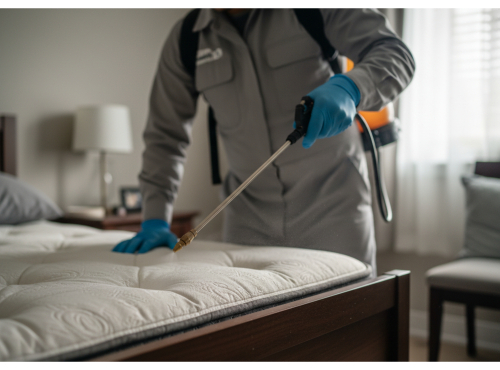
Bed bugs have re-emerged as one of the most persistent structural pests in Toronto, affecting residential towers, heritage homes, and hospitality venues alike. The city’s high population density and constant movement of people through major travel corridors have created ideal conditions for their spread. From the bustling crowds at Union Station to the steady flow of visitors around Yonge and Dundas Square, infestations can start in one location and quickly disperse across neighbourhoods through luggage, clothing, or shared furnishings.
Reports from Health Canada and pest management professionals across the Greater Toronto Area (GTA) indicate that infestations are increasingly common in multi-unit dwellings, particularly near transit hubs and entertainment districts such as Queen and Spadina or Bloor and Bathurst. These areas combine dense housing with transient populations, creating frequent opportunities for bed bug transfer.
Bed bugs’ ability to hide in tight crevices, coupled with their growing resistance to common insecticides, has made control challenging even for experienced Pest Management Professionals (PMPs). Local pest control companies operating near landmarks like the CN Tower, Kensington Market, and Harbourfront Centre often note that infestations occur regardless of property type or cleanliness.
As Toronto continues to grow both vertically and demographically, the city’s housing diversity, from downtown condominiums to older apartment buildings, requires adaptable, science-based treatment programs. Addressing Toronto’s bed bug resurgence demands not only effective extermination techniques but also consistent public education and integrated management across the city’s varied environments.
Understanding Bed Bug Biology and Behavior
Bed bugs (Cimex lectularius) have adapted exceptionally well to Toronto’s urban environment. Their nocturnal nature and thigmotactic behavior, the tendency to hide in tight spaces like mattress seams, baseboards, and wall cracks, allow them to remain undetected for long periods. Areas with high housing density, such as Yonge and Dundas, Queen and Spadina, and Bloor and Bathurst, often experience recurring infestations because these pests easily migrate between adjoining units.
Their sclerotized cuticle protects them from mechanical and chemical stress, while frequent feeding cycles and rapid egg production enable populations to expand quickly. Resistance to common pyrethroid formulations has become widespread, driven by behavioral resistance and adaptation to residual pesticides.
Modern pest management in the Greater Toronto Area (GTA) now relies on integrated strategies, combining heat treatment, chitin synthesis inhibitors, and microencapsulated formulations (ME) that act through tarsal contact for extended control.
For professional assessment or treatment recommendations tailored to your property, contact GTA Toronto Pest Control for expert guidance and service options.
Bed Bug Treatment Options and Services in Toronto
Toronto’s pest control professionals employ a range of scientifically validated treatment methods to eliminate bed bug infestations across residential, commercial, and hospitality environments. Licensed Pest Management Professionals (PMPs) in the city rely on a combination of Integrated Pest Management (IPM) strategies, advanced detection tools, and Health Canada–approved formulations to ensure safe and lasting results.
- Heat Treatment (Thermal Remediation)
Heat treatment remains one of the most effective non-chemical approaches for complete bed bug eradication. Using specialized heaters, temperatures are elevated above 50°C, a thermal threshold proven to eliminate all bed bug life stages, including eggs. Many companies operating near Queen Street West, Yorkville, and Yonge and Bloor offer mobile thermal systems capable of treating condominiums and hotel rooms without the need for extensive chemical application. This method is particularly suited for units with sensitive occupants or chemical restrictions.
- Chemical and Residual Treatments
For properties where thermal remediation is not practical, certified technicians use residual sprays or microencapsulated formulations (ME) that provide prolonged control through tarsal contact, a process in which bed bugs absorb the active ingredient as they move across treated surfaces. These treatments typically involve a crack and crevice application around baseboards, bed frames, and electrical outlets. Many professionals use pyrethroid or biorational pesticide products, always applied in accordance with Health Canada PCP registration and WHMIS safety standards.
- Steam and Vacuum Applications
In Toronto’s older housing stock near Spadina and Dundas or Bathurst and Queen, where structural voids and plaster walls can complicate control, steam treatment and vacuum removal are often integrated with chemical applications. Superheated vapor penetrates deep into mattresses, upholstery, and seams, instantly neutralizing active bed bugs and eggs while reducing pesticide reliance.
- Monitoring and Follow-Up Inspections
Professional services include the use of monitoring devices, pheromone traps, and visual inspections during follow-up visits to assess control success. Some PMPs employ threshold monitoring to determine whether additional treatments are necessary, particularly in multi-unit dwellings.
- Specialized Service Programs
Toronto pest management companies often provide customized IPM programs for hotels, student housing, and property management firms. These may include tenant education, preventative inspections, and routine service schedules. Locations such as the Distillery District, Harbourfront Centre, and St. Lawrence Market rely on these programs to maintain pest-free conditions without disrupting business operations.
Cost of Bed Bug Extermination and Effectiveness of Treatments
The cost of professional bed bug extermination in Toronto varies depending on several measurable factors, including infestation severity, treatment method, property type, and service coverage area. Industry estimates from licensed Pest Management Professionals (PMPs) across the Greater Toronto Area (GTA) place the average range between $350 and $1,500 per treatment cycle, with higher rates for multi-room or multi-unit structures.
While Integrated Pest Management (IPM) remains the industry standard, no single approach fits every situation. Evaluating both cost and effectiveness requires a clear understanding of how each treatment type performs over time, as shown below.
Comparative Overview of Bed Bug Treatments in Toronto
| Treatment Method | Average Cost (Toronto, 2025) | Typical Duration | Effectiveness | Advantages | Limitations |
| Heat Treatment (Thermal Remediation) | $800 – $1,500 per unit | 1 day | 95–100% | Immediate kill of all life stages; chemical-free; safe for occupants | Requires specialized equipment; may not prevent reintroduction |
| Chemical Residual Treatment (Pyrethroid or IGR-Based) | $350 – $900 | 2–3 visits over 2–4 weeks | 80–95% | Long-lasting residual effect; targeted application | Possible resistance; may require follow-up |
| Steam and Vacuum Treatment | $300 – $700 | 1–2 sessions | 70–85% | Non-toxic; effective on contact; ideal for sensitive environments | Labor-intensive; limited residual effect |
| Combined IPM Program (Heat + Chemical + Monitoring) | $1,200 – $2,000 (multi-room) | 3–4 weeks (with follow-up) | 95–100% | Comprehensive and preventative; includes education and monitoring | Higher upfront cost; requires client cooperation |
| Fumigation (Rare in Toronto) | $2,500+ | 1–2 days | 99–100% | Total kill including eggs | Not suitable for most residential properties; requires full evacuation |
Influencing Cost Factors
- Infestation Severity:
Heavier infestations involving multiple rooms or adjoining units require additional treatments, monitoring, and labor hours. - Property Type and Accessibility:
Condominiums in downtown areas like Yonge and Dundas or King and Spadina may have strict building access protocols, increasing technician time and cost. - Treatment Type and Materials Used:
Heat systems and microencapsulated formulations (ME) carry higher operational expenses but yield superior control and lower reinfestation rates. - Follow-Up Visits and Warranty:
Most Toronto PMPs include a warranty period (typically 30 to 90 days), during which follow-up inspections and monitoring devices verify eradication success.
Effectiveness and Long-Term Outcomes
Field reports and NPMA case studies indicate that thermal and integrated treatments consistently outperform single-method applications, especially in multi-unit dwellings. Chemical resistance mapping performed by Canadian researchers has identified growing tolerance among bed bug populations to certain pyrethroids, emphasizing the need for rotational chemistry and biorational pesticide use.
Local exterminators serving areas such as Queen Street West, Harbourfront Centre, and Yorkville report that IPM programs combining heat, residual treatment, and preventive inspections achieve over 95% control success when residents follow preparation and sanitation protocols.
Ultimately, effective bed bug management in Toronto requires a balance between immediate elimination and long-term prevention. While costs can vary widely, investing in a professional, licensed extermination service ensures regulatory compliance, measurable results, and protection for both property and occupants throughout the Greater Toronto Area.
Case Studies: Bed Bug Management Across Toronto
Toronto’s diverse urban landscape presents a wide range of structural and operational challenges for pest management professionals. From heritage buildings in the Distillery District to modern condominiums near Yonge and Bloor, bed bug control strategies must adapt to differences in architecture, occupant density, and operational needs. The following real-world case studies illustrate how integrated, science-based programs have produced measurable success across the city.
High-Rise Condominium near Yonge & Bloor
A luxury condominium complex at the intersection of Yonge Street and Bloor Street faced repeated bed bug infestations across several units, primarily due to uncoordinated treatments and resident mobility. The property management company engaged a licensed Pest Management Professional (PMP) team certified under Ontario’s Structural Applicator License program.
Approach:
The technicians implemented a building-wide Integrated Pest Management (IPM) protocol involving:
- Thermal remediation for heavily infested suites.
- Residual treatment using microencapsulated formulations (ME) for shared walls and hallways.
- Pheromone monitoring devices in laundry and waste areas.
- Resident education sessions emphasizing preparation and clutter reduction.
Outcome:
After two treatment cycles and ongoing monitoring, infestation rates dropped by over 90% within three months, confirmed through threshold monitoring and visual inspections. Preventive maintenance contracts were added to sustain long-term results.
Boutique Hotel in the Distillery District
An upscale boutique hotel situated in the Distillery District, near Parliament and Mill Streets, experienced intermittent bed bug sightings reported through guest reviews. Management sought a discreet solution that avoided chemical odor and room downtime.
Approach:
A Toronto-based PMP specializing in hospitality pest management installed monitoring boards and interceptor traps under bed frames in all guest rooms. A combination of steam treatment, spot treatment with desiccant dust, and vacuum removal was used to eliminate identified hot spots.
To preserve guest confidence, the PMP employed unmarked service vehicles and scheduled all treatments during off-peak hours. Staff training on early detection and bed linen inspection became part of the hotel’s standard operating procedure.
Outcome:
The hotel achieved zero reported incidents over the next six months. Preventive quarterly pest control service plans were established to maintain certification readiness and protect the brand reputation of this heritage property.
Multi-Unit Residential Complex in Parkdale
A 10-storey apartment building near Queen Street West and Dufferin Street struggled with recurring infestations due to tenant turnover and limited cooperation. The property management collaborated with municipal housing officials and a local PMP experienced in community IPM programs.
Approach:
The PMP deployed a zone isolation protocol, segmenting the building into containment areas to prevent spread. A mixed-treatment strategy included:
- Heat treatment for severe infestations.
- Residual spray applications around structural voids and baseboards.
- Vacuum removal and laundry sanitization guidance for tenants.
- Regular inspections using monitoring devices placed in common areas.
Outcome:
Within four months, active infestations were reduced by 95%, as verified by visual inspections and tenant reporting systems. The ongoing education campaign improved resident participation and reduced re-infestation incidents citywide.
Preventive Programs and Long-Term Protection
Sustainable bed bug control in Toronto extends beyond one-time treatments. The most effective protection comes from ongoing Integrated Pest Management (IPM) programs that combine monitoring, sanitation, and education to reduce reinfestation risks across residential, commercial, and hospitality environments.
Threshold Monitoring and Early Detection
Professional pest management firms across the Greater Toronto Area (GTA) employ threshold monitoring systems to detect bed bug presence before infestations spread. Using monitoring devices, interceptor traps, and trend analysis, technicians can identify activity hotspots in buildings near Queen and Bathurst, Spadina and Dundas, or Yonge and College, where population density often accelerates pest migration. Regular inspections are scheduled quarterly or seasonally to ensure long-term control.
Sanitation Review and Structural Maintenance
A thorough sanitation review remains central to IPM. Property managers and residents are advised to maintain clutter-free living spaces, launder bedding on high heat, and seal structural voids to remove potential harborage sites. These steps are reinforced through client education programs that emphasize proper housekeeping, preparation for treatments, and cooperation during follow-up visits.
Community Awareness and Public Health Campaigns
The City of Toronto Public Health department actively promotes seasonal awareness initiatives, providing resources on identifying early signs of infestation and safe response practices. Campaigns are often focused around high-traffic districts such as the Eaton Centre, Kensington Market, and Harbourfront Centre, where tourism and population movement heighten exposure risk.
Long-Term Protection Through Partnership
Effective prevention is built on collaboration between tenants, landlords, and licensed Pest Management Professionals (PMPs). Many Toronto properties now adopt annual IPM service plans that include proactive inspections, educational materials, and ongoing monitoring for early intervention.
Frequently Asked Questions
- How much does bed bug extermination cost in Toronto?
Most professional treatments range from $350 to $1,500, depending on the infestation size, treatment type, and number of visits required. - What’s the most effective treatment method?
Heat treatment and Integrated Pest Management (IPM) programs combining heat, chemical, and steam methods deliver the most consistent long-term results. - How long does a typical treatment take?
A standard single-unit treatment takes 4 to 8 hours, while full-building programs may require several visits over 2 to 4 weeks. - Can I get rid of bed bugs myself?
DIY methods rarely eliminate infestations completely. Professional treatments are needed to target eggs, nymphs, and hidden adults effectively. - How can I prevent future infestations?
Inspect used furniture, reduce clutter, vacuum regularly, and schedule annual PMP inspections, especially in multi-unit buildings or high-traffic areas. - Are treatments safe for pets and children?
Yes. Licensed Pest Management Professionals (PMPs) use Health Canada–approved products and follow strict safety protocols, including re-entry intervals. - How soon can I return to my home after treatment?
Most treatments require a 4–6 hour wait time before re-entry, depending on the product used and ventilation. - Who should I contact for expert help?
For fast, professional bed bug inspection or treatment, contact GTA Toronto Pest Control for licensed and effective solutions throughout the Greater Toronto Area.
Protecting Toronto’s Homes and Businesses
Bed bug control in Toronto requires more than reactive extermination, it depends on continuous vigilance, science-based treatment, and community awareness. With infestations affecting everything from high-rise condominiums near Yonge and Bloor to boutique hotels in the Distillery District, the city’s pest management challenges reflect its density, mobility, and housing diversity.
Modern Integrated Pest Management (IPM) programs, supported by regular inspections, sanitation practices, and resistance monitoring, have proven to be the most sustainable defense. Collaboration between property owners, tenants, and certified Pest Management Professionals (PMPs) remains essential to long-term success.
The City of Toronto Public Health continues to reinforce seasonal awareness initiatives, ensuring residents understand prevention and early detection. Combined with professional intervention, these efforts help maintain cleaner, healthier living and working spaces citywide.
Author Bio: Naeem Choudhry
Pest Control Expert
Naeem Choudhry is a seasoned pest control specialist with over 20 years of hands-on experience. Based in Toronto, he stays up to date with the latest industry best practices and is an active member of the National Pest Management Association of Canada.
Known for his practical tips and outstanding customer service, Naeem frequently hosts community workshops where he educates the public on pest identification, behaviour, and effective control methods. When he’s not out in the field, he shares his expertise through articles, educational events, and community outreach initiatives.
For more insights, follow him on x.com.