
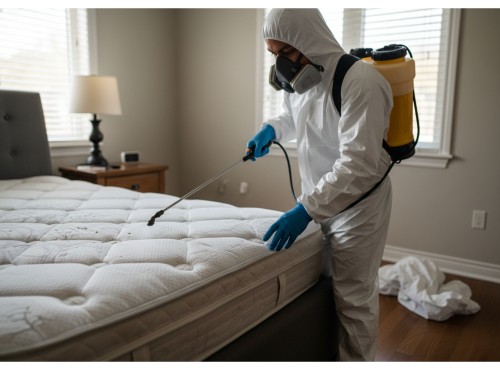
Over the past decade, Toronto has become a focal point in Canada’s resurgence of bed bug activity, prompting a shift in how Pest Management Professionals (PMPs) across the Greater Toronto Area (GTA) design and execute their control programs. Once believed to be nearly eradicated, Cimex lectularius has returned with remarkable persistence. Data from Health Canada and regional pest management audits confirm that Toronto ranks among the most affected municipalities nationwide.
Infestation reports have risen sharply across the city’s most populated zones. Field inspections conducted by licensed PMPs reveal consistent activity in high-traffic neighborhoods, particularly near Queen Street West and Spadina Avenue, Jarvis and Carlton Streets, and residential corridors in Parkdale, St. James Town, and North York. Toronto Public Health has tracked year-over-year increases in reports from multi-unit dwellings, community shelters, and transient housing, underscoring the adaptability of this pest in dense urban environments.
Toronto’s cosmopolitan character and heavy population movement create ideal conditions for bed bug spread. The city’s integrated transit system, extensive hospitality network, and growing number of short-term rental properties provide constant opportunities for reintroduction. PMPs operating near intersections such as Yonge and Dundas or Queen and Bathurst consistently observe infestations originating from high-occupancy locations including hotels, dormitories, and furnished rental suites. Even tourism hubs near the CN Tower, Eaton Centre, and the Distillery District have reported local infestations, illustrating that these insects can flourish wherever human activity is sustained.
The Global and Local Connection
The resurgence of bed bugs is not limited to Toronto; it reflects a global trend influenced by increased travel and resistance to common insecticides. According to the National Pest Management Association (NPMA), international travel is one of the primary vectors for bed bug transfer, with travelers inadvertently transporting eggs or nymphs in luggage and clothing. In Toronto, the proximity of Pearson International Airport, Union Station, and major hotel districts increases the probability of cross-border introduction.
These insects exhibit thigmotactic behavior, preferring to occupy tight, enclosed harborage sites such as mattress seams, baseboards, and behind picture frames. Their biology enables them to survive for months without a blood meal, which makes detection challenging. Without professional inspection and monitoring tools, early infestations are often overlooked until the population expands to a visible level.
The Urban Density Challenge
Urban architecture amplifies the complexity of control. In multi-unit structures like condominiums, student residences, and aging apartment towers, bed bugs easily migrate between adjoining units. They travel through wall voids, electrical conduits, pipe chases, and shared laundry facilities. Once a unit becomes infested, adjacent areas can be quickly compromised if not properly isolated.
Health Canada’s Pesticide Management Regulatory Agency (PMRA) and Integrated Pest Management (IPM) guidelines stress the necessity of early intervention. A successful IPM program incorporates regular inspections, pest identification, sanitation reviews, and threshold monitoring to establish when treatment is warranted. This evidence-based approach is critical in urban environments like Toronto, where recurring infestations can lead to resident fatigue and inconsistent reporting.
Across the GTA, PMPs have adapted by combining scientific methods with improved client education. A coordinated plan integrating heat treatments, targeted insecticidal applications, and resident cooperation has become the foundation for sustainable control. These strategies are applied in compliance with WHMIS labeling and Restricted Entry Interval (REI) safety requirements to ensure occupant well-being.
Understanding Bed Bugs in the Toronto Context
Bed bugs remain one of the most challenging public health pests within Toronto’s urban ecosystem. Scientifically classified as Cimex lectularius, they are hematophagous insects. These are blood-feeding ectoparasites that are primarily nocturnal. Their ability to conceal themselves in minute crevices and to survive extended periods without feeding makes them formidable adversaries for pest control operators.
A typical introduction occurs when a few insects are brought into a structure via luggage, used furniture, or public transportation. In Toronto, their spread often begins in densely populated corridors such as Yonge and Queen Streets or the condominium zones surrounding College and Bay. Once inside, they quickly establish harborage within tight spaces, which would be beneath carpets, behind wall plates, and inside box springs or bed frames.
Even unoccupied units remain at risk, as these insects can persist for several months awaiting a host. This resilience, combined with their rapid reproductive cycle, underscores the need for consistent monitoring and prompt action by certified professionals.
Control Strategies: Science, Structure, and Safety
Modern pest management relies on a balance of mechanical, chemical, and environmental tactics that minimize disruption to residents while maximizing efficacy. Both Health Canada and the Ontario Ministry of the Environment, Conservation and Parks (MECP) endorse the use of professional treatment methods over unverified DIY approaches, emphasizing the importance of qualified technicians.
Integrated Pest Management (IPM) remains the cornerstone strategy for long-term suppression. Licensed PMPs in Toronto apply IPM protocols that include inspection, vacuum removal, heat or steam treatment, and the application of residual insecticides or biorational products with minimal environmental impact.
Below is a summary of the most frequently implemented bed bug control options used across the GTA:
| Treatment Method | Description | Usage Context |
| Heat Treatment | Employs specialized heaters to raise ambient temperature to approximately 50–60°C, eliminating all bed bug life stages including eggs. | Ideal for residential units, hotels, or large-scale infestations requiring structural penetration. |
| Residual Spray / Contact Kill | Application of Health Canada–approved synthetic pyrethroids or non-repellent insecticides that target active and emerging populations. | Common in high-density dwellings; often paired with follow-up visits. |
| Vacuuming & Steam Treatment | Physical removal of visible insects and eggs from mattresses, seams, and crevices using high-heat steam devices. | Conducted during initial cleanup or preparation stages. |
| Encasements and Exclusion Measures | Mattress encasements and structural sealing limit re-infestation by eliminating harborage sites. | Recommended as part of ongoing preventive maintenance. |
These interventions are guided by threshold monitoring and trend analysis. These are methods that help PMPs assess infestation levels and verify post-treatment success. Many professionals now use microencapsulated formulations or chitin synthesis inhibitors to provide long-lasting control with reduced chemical exposure risks.
Throughout Toronto, audit compliance is a core expectation, especially for clients in the hospitality and property management sectors. Licensed companies maintain MSDS/SDS documentation, Health Canada PCP registration, and full WHMIS compliance for all products applied. Post-treatment reports are issued to confirm service completion, follow-up scheduling, and chemical traceability.
Bed Bug Infestation Issues and Experiences in Toronto
Toronto’s ongoing struggle with bed bugs has evolved into a complex urban management challenge. The city’s population density, global connectivity, and aging housing stock create near-perfect conditions for persistence. While individual infestations are rarely catastrophic, their cumulative effect across hundreds of buildings poses significant operational, financial, and psychological burdens for residents and property managers alike.
Residential Environments: Shared Walls, Shared Risks
In multi-unit dwellings, infestations often begin in a single apartment and rapidly migrate to adjoining suites through structural voids, utility penetrations, and shared ventilation systems. This cross-unit spread is particularly evident in heritage apartments along Bathurst and Bloor Streets, where older infrastructure provides abundant pathways for insect movement.
Field reports from licensed Pest Management Professionals (PMPs) confirm that consistent communication and compliance among residents are decisive factors in containment. Where tenants cooperate—following pre-treatment checklists, decluttering, and providing unit access—eradication success rates rise sharply. Conversely, inconsistent cooperation often leads to re-infestation cycles that strain both management budgets and resident morale.
In Toronto neighborhoods such as Cabbagetown, Parkdale, and St. James Town, technicians frequently encounter repeat infestations linked to delayed reporting. These cases demonstrate the importance of education campaigns encouraging early detection and immediate professional intervention. According to Toronto Public Health, tenant awareness combined with proactive inspection schedules remains one of the city’s most effective containment tools.
A Coordinated Approach
Toronto’s pest control community continues to adapt, combining thermal remediation, residual chemical applications, and preventive IPM frameworks. The collaboration between Health Canada–registered PMPs, property managers, and residents is reshaping the city’s approach to bed bug control from reactive to preventative.
For homeowners, businesses, or property managers encountering bed bug issues, contact GTA Toronto Pest Control. We ensure access to certified technicians, scientifically validated treatments, and guaranteed follow-up care.
Author Bio: Naeem Choudhry
Pest Control Expert
Naeem Choudhry is a seasoned pest control specialist with over 20 years of hands-on experience. Based in Toronto, he stays up to date with the latest industry best practices and is an active member of the National Pest Management Association of Canada.
Known for his practical tips and outstanding customer service, Naeem frequently hosts community workshops where he educates the public on pest identification, behaviour, and effective control methods. When he’s not out in the field, he shares his expertise through articles, educational events, and community outreach initiatives.
For more insights, follow him on x.com.