You spray them. They disappear. Problem solved… right?
Then a few days later, sometimes even the next day, they’re back. Same place, same trail, same frustration.
If this sounds familiar, you’re not alone. Many homeowners deal with this exact cycle, especially during warmer months. The truth is, spraying ants rarely fixes the actual problem, and in some cases, it can make things worse.
Let’s break down why ants keep returning after you spray, and what’s really going on behind the scenes.
Surface-Level Solutions Only Handle Surface-Level Problems
Most store-bought ant sprays are designed for immediate results. They kill ants on contact, which creates the illusion that the infestation is under control.
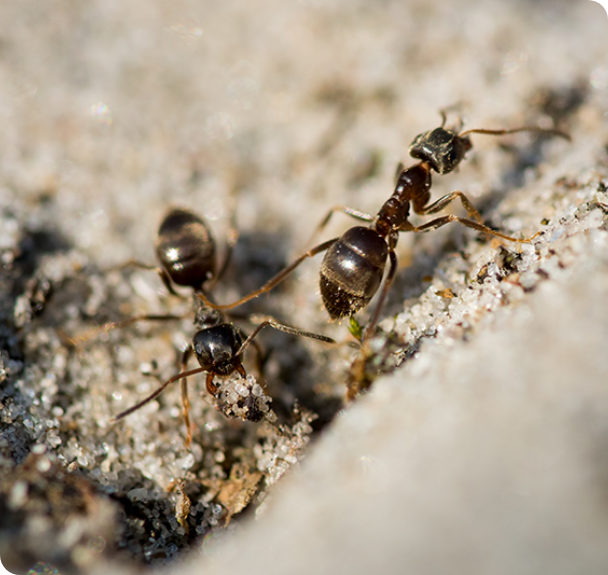
But here’s the catch: those ants you see are only a small portion of the colony. A typical ant colony can contain thousands of ants, and the vast majority stay hidden:
- Behind walls
- Under flooring
- Inside insulation
- Beneath your home’s foundation
When you spray, you’re only eliminating the workers that happen to be out in the open. The queen, and the rest of the colony, remains untouched. As long as the colony is alive, new worker ants will continue to emerge.
You’re Interrupting the Trail, Not Eliminating It
Ants rely heavily on pheromone trails to navigate between their nest and food sources.
When you spray a visible trail for ant control:
- You temporarily disrupt that pathway
- Ants scatter and search for new routes
- Within hours or days, a new trail is established
In other words, you’re not stopping the system, but just forcing it to reroute. This is why ants often reappear in slightly different locations after spraying.
Sprays Can Cause Colonies to Spread
Here’s something many homeowners don’t realize: certain types of ants respond to threats by splitting their colony.
This process is known as “budding.”
When exposed to sprays or disturbances:
- The colony may divide into multiple groups
- Each group forms a new nest
- The infestation becomes larger and more widespread
Instead of solving the issue, spraying can turn one colony into several, making the problem significantly harder to control.
The Queen Is the Real Problem
At the center of every ant colony is the queen. Her role is simple: reproduce. Some colonies even have multiple queens, which increases their ability to grow and survive.
Unless the queen is eliminated:
- The colony continues producing new ants
- Worker ants keep searching for food
- Infestation cycles never truly end
Sprays almost never reach the queen because she remains deep inside the nest, well-protected from external threats.
Food Sources Are Still Available
Even if you reduce the number of ants temporarily, your home may still be an ideal food source. Ants are incredibly persistent. If they’ve found food once, they will keep trying to access it again.
Common attractants include:
- Crumbs and spills
- Sugar and sweet foods
- Grease or cooking residue
- Pet food left out
- Garbage or recycling bins
As long as food is available, ants will keep coming back, no matter how often you spray.
Entry Points Remain Open
Another major reason ants return is simple: they can still get inside. Homes naturally develop small openings over time:
- Cracks in foundations
- Gaps around doors and windows
- Openings around pipes and utility lines
These entry points are often too small to notice, but large enough for ants.
If these aren’t sealed, new ants will continue entering your home, replacing the ones you’ve eliminated.
Seasonal Pressure Keeps Pushing Ants Indoors
In places like Toronto, seasonal changes play a big role in ant activity. During spring and summer:
- Colonies become more active
- Food demand increases
- Ants expand their foraging areas
Environmental factors like rain or heat can also push ants indoors in search of shelter and resources. This means even if you spray regularly, external pressure keeps driving new ants into your home.
Why Baits Work Better Than Sprays
If sprays don’t solve the problem, what does?
The key is targeting the colony, not just the workers. Baiting systems are designed to:
- Attract ants with food
- Allow them to carry the bait back to the colony
- Eliminate the queen and other ants at the source
This approach takes longer than spraying, but it’s far more effective in the long run. It addresses the root cause instead of just the symptoms.
When the Problem Needs a Professional Solution
If ants keep returning despite repeated treatments, it’s a sign that the infestation is established and requires a more strategic approach.
Professional ant control in Toronto can help with:
- Identifying the exact ant species
- Locating primary and satellite nests
- Using targeted treatments that reach the colony
- Preventing future entry and activity
This level of precision is difficult to achieve with over-the-counter products.
Breaking the Cycle for Good
To stop ants from coming back, you need to address multiple factors at once:
- Eliminate the colony (including the queen)
- Remove or secure food sources
- Seal all entry points
- Address moisture issues that attract ants
If ants keep coming back after you spray, it’s not because you’re doing something wrong. It’s because sprays aren’t designed to solve the real problem. They provide quick, visible results, but they don’t eliminate the source of the infestation. As long as the colony remains active, ants will continue to return.
That’s why professional ant control in Toronto is often the most effective way to achieve lasting results. At GTA Toronto Pest Control, we go beyond surface-level treatments. Our team identifies the root cause of the infestation, targets the entire colony, and implements long-term prevention strategies to keep ants from coming back.
If you’re tired of the cycle of spraying and seeing ants return, it may be time for a solution that actually works.