
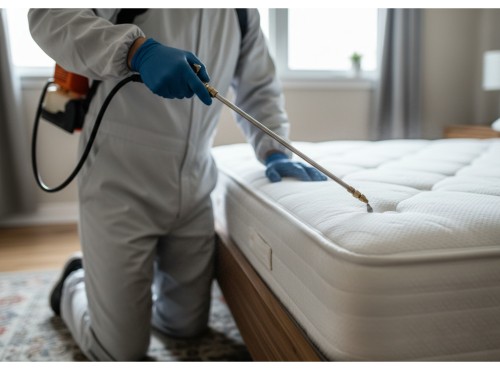
Toronto continues to face a steady resurgence of bed bug infestations across residential and commercial properties, reflecting trends seen in major North American cities. According to Public Health Ontario, reports of bed bug activity have increased in dense urban districts where transient populations and high residential turnover are common. The National Pest Management Association (NPMA) notes that metropolitan hubs with extensive public transit networks and tourism traffic experience persistent reinfestation cycles, driven by the insects’ ability to hitchhike through luggage and personal belongings.
In Toronto, high-density areas such as apartment towers near Yonge and Dundas, Queen and Spadina, and short-term rental zones around Bay and King Streets remain focal points for pest management professionals. These neighbourhoods, marked by mixed-use buildings and continuous human movement, provide ideal conditions for Cimex lectularius to spread rapidly between units.
Local pest management firms report that hospitality venues and multi-unit dwellings, particularly in corridors connecting the Eaton Centre, CN Tower, and Entertainment District, require ongoing monitoring and follow-up treatments. As the city’s housing density and travel activity grow, bed bug control has evolved from isolated intervention to a consistent public health priority supported by Integrated Pest Management (IPM) principles and proactive inspection protocols.
Professional Bed Bug Extermination Services in Toronto
Toronto’s pest control industry has developed a highly structured, science-based approach to managing bed bug infestations across residential, commercial, and hospitality settings. Certified Pest Management Professionals (PMPs) licensed under Ontario’s Structural Pest Control Act follow an inspection-to-eradication process that prioritizes accuracy, safety, and compliance with Health Canada PCP-registered formulations.
Comprehensive Inspection and Detection
A professional bed bug program begins with a site assessment and visual inspection, supported by monitoring devices and crack and crevice surveys to locate harborage sites. Trained technicians inspect bed frames, baseboards, and upholstered furniture, particularly in multi-unit dwellings and hotels near Yonge and Bloor or Queen and Bathurst, where infestations tend to spread through shared walls and utility conduits.
Treatment Methods and Application Protocols
Leading pest control companies in Toronto employ a mix of heat treatment, residual chemical application, and Integrated Pest Management (IPM) techniques.
- Heat treatments use specialized equipment to raise ambient temperatures above 50°C, effectively killing all life stages, including eggs, in infested zones.
- Chemical treatments rely on modern formulations such as microencapsulated, suspension concentrate (SC), or water-dispersible granule (WDG) products. These are applied through spot treatments, void injections, and residual sprays, ensuring contact kill and long-term control.
- Desiccant dusts and insect growth regulators (IGRs) are incorporated for persistent infestations, targeting molting cycles and minimizing resistance.
All treatments are executed under strict Restricted Entry Intervals (REIs) and WHMIS-compliant safety standards.
Follow-Up, Monitoring, and Client Education
Post-treatment, technicians conduct follow-up inspections to verify elimination and address behavioral resistance or reinfestation risks. Many service providers in areas like Kensington Market, Yorkville, and the Distillery District now integrate preventative monitoring programs using pheromone traps and ILTs (insect light traps) to detect early activity.
Technicians emphasize client preparation and education, laundering bedding at high heat, reducing clutter, and sealing cracks, to prevent recurrence. These proactive measures, combined with data-driven trend analysis and adherence to IPM protocols, have made Toronto’s bed bug extermination services among the most advanced in Canada.
Cost and Effectiveness of Bed Bug Control Methods in Toronto
The cost of professional bed bug control in Toronto varies widely depending on the method used, infestation severity, and property type. Residential units, hospitality establishments, and multi-unit buildings each require tailored treatment plans, balancing immediate eradication with long-term prevention.
Average Service Costs Across the GTA
According to data gathered from leading Toronto pest management firms and public service rate references, the average cost for bed bug extermination services ranges between CAD $350 and $650 per unit for localized infestations, while multi-room treatments or commercial facilities can exceed CAD $1,200. Larger hotels or apartment complexes, particularly those near Yonge and Dundas, Bay and Queen, or King and Spadina, often negotiate customized treatment plans that include ongoing monitoring and preventive service contracts.
Heat treatments, while costlier upfront, typically range from CAD $800 to $2,000 depending on square footage and building insulation. However, they are highly effective when performed correctly, offering complete elimination in a single service with minimal chemical use. In contrast, chemical treatments are more affordable initially, averaging CAD $300 to $600 per treatment, but often require two to three follow-up visits to fully eliminate persistent infestations.
Effectiveness and Long-Term Outcomes
From a technical perspective, thermal remediation remains the most effective single-treatment solution, achieving over 95% success rates when monitored with post-treatment visual inspections and monitoring devices. Residual chemical applications, especially those incorporating microencapsulated formulations, biorational pesticides, and chitin synthesis inhibitors, provide longer-term suppression, particularly in dense housing near Queen Street West and Parliament Street where reinfestation risk is elevated.
The most reliable outcomes come from Integrated Pest Management (IPM) programs, which combine chemical, heat, and exclusion methods supported by threshold monitoring and trend analysis. Property managers who invest in recurring preventative services and tenant education report significantly reduced recurrence rates, according to field data shared by Toronto PMPs.
Balancing Budget and Performance
For residents and business owners, choosing between heat and chemical options often depends on budget and operational constraints. Heat treatment offers rapid relief with minimal disruption, while chemical and IPM approaches provide steady control over time with better cost distribution. Many service providers near Queen & Spadina and Front & Jarvis now offer tiered treatment packages, combining inspection, initial eradication, and ongoing follow-up, to align service value with long-term pest-free assurance.
In Toronto’s complex urban environment, the most cost-effective strategy remains one that integrates accurate diagnosis, professional application, and consistent monitoring. This combination ensures sustainable results, minimizes chemical exposure, and protects both public health and property value.
Field Insights from Local Infestations
Real-world field data from pest management professionals (PMPs) across Toronto reveal how geography, property type, and human behavior shape the success of bed bug control efforts. The following case studies highlight distinct challenges and response strategies across different city zones, ranging from heritage structures to high-density condominiums.
Case Study 1: Multi-Unit High-Rise near Yonge & Bloor
A condominium complex at the Yonge and Bloor intersection, one of Toronto’s most densely populated corridors, reported recurring bed bug activity across multiple floors. PMP teams employed a comprehensive inspection and heat treatment protocol, followed by residual chemical spot applications using microencapsulated formulations for prolonged effectiveness.
Through threshold monitoring and tenant education, reinfestations decreased by over 80% within six months. The key finding was that incomplete tenant preparation, such as unwashed bedding and retained clutter, was the primary cause of earlier treatment failures.
Case Study 2: Boutique Hotel near Queen & Spadina
In the Queen and Spadina hospitality district, a boutique hotel faced repeated guest complaints linked to bed bug bites. The establishment required zero tolerance compliance, especially due to its proximity to major attractions like the CN Tower and Rogers Centre.
Technicians implemented a two-phase IPM program combining thermal remediation, void treatment, and residual dust application in baseboards and bed frames. Regular post-treatment monitoring with insect light traps (ILTs) and pheromone devices ensured early detection of reintroductions. After four months, no new bed bug activity was recorded, allowing the property to regain its full occupancy reputation.
Case Study 3: Heritage Rental near Queen & Bathurst
A late-19th-century brick rental property near Queen and Bathurst presented structural challenges, including multiple harborage sites behind baseboards and aged plaster walls. PMPs applied a chemical treatment sequence utilizing suspension concentrates (SC) and IGR-based desiccant dusts for egg disruption.
Despite initial setbacks due to deep cracks and thigmotactic behavior, the insects’ tendency to seek tight hiding spaces, follow-up vacuum removal and localized heat application achieved full elimination within two treatment cycles.
Case Study 4: Student Housing near the University Avenue Corridor
In a cluster of off-campus apartments close to University Avenue and Dundas Street, transient populations contributed to recurring infestations. The property management firm adopted a preventative contract including quarterly inspections, trend analysis, and educational workshops for tenants.
Over a one-year period, PMP data showed a consistent decline in bed bug reports by 70%, attributed to improved sanitation and ongoing exclusion measures.
Long-Term Results and Customer Experience
In Toronto’s competitive pest management landscape, the true measure of success in bed bug control lies not in immediate eradication but in long-term prevention and client satisfaction. Post-treatment performance assessments conducted by licensed Pest Management Professionals (PMPs) show that effectiveness depends on the integration of treatment methods, resident cooperation, and consistent follow-up monitoring.
Long-Term Performance Indicators
Field evaluations across properties in Downtown Toronto, including the Bay and King financial district and the Distillery District, indicate that Integrated Pest Management (IPM) programs deliver the most sustainable results. When thermal remediation is combined with residual chemical treatments and monitoring devices, recurrence rates drop significantly. PMPs conducting trend analysis across multi-unit dwellings near Parliament and Queen Streets found that infestations rarely reappeared when post-treatment inspections were performed every 30 to 45 days for at least one quarter.
The use of monitoring devices, such as glue boards, pheromone traps, and ILTs (insect light traps), has proven instrumental in tracking bed bug activity. These tools enable early detection of reintroductions, allowing pest control teams to apply targeted interventions before an infestation becomes established.
Customer Experience and Perception
Feedback from residential clients and commercial operators across Kensington Market, Yorkville, and the Entertainment District consistently emphasizes the importance of clear communication and thorough preparation guidance. PMPs who provide clients with pre-treatment checklists, laundering protocols, and follow-up education report higher satisfaction and fewer callbacks.
Hotels and rental property managers often express that rapid service response, discretion, and documented results,including service logs and compliance records are critical to maintaining reputation and compliance with Toronto Public Health standards. According to client feedback collected by Toronto-based pest management companies, customers who received detailed service reports and preventive maintenance recommendations were more likely to engage in recurring service contracts, contributing to long-term pest-free environments.
Continuous Improvement through Data and IPM
Modern pest control in Toronto now relies heavily on data collection and performance tracking. Companies maintain digital service records to analyze infestation patterns and measure control effectiveness over time. This shift toward evidence-based management has reduced unnecessary pesticide use while improving precision and compliance with Health Canada and WHMIS regulations.
Ultimately, sustainable bed bug control in Toronto is achieved through methodical follow-up, informed customer participation, and adaptive treatment planning. The city’s most successful programs operate on partnership, between technician and client, between prevention and treatment, and between immediate control and long-term peace of mind.
Protecting Toronto’s Homes and Businesses
Bed bug control in Toronto demands more than reactive treatment, it requires an ongoing commitment to proactive management, education, and community vigilance. With the city’s mix of high-rise living, historic buildings, and an active tourism economy, the potential for infestation remains constant. Sustained success depends on early detection, consistent monitoring, and collaboration between property owners, tenants, and licensed Pest Management Professionals (PMPs).
Across neighbourhoods from Queen and Spadina to Yonge and Dundas, pest control experts emphasize that preventive inspection programs and Integrated Pest Management (IPM) strategies are the most reliable means of maintaining pest-free environments. Routine assessments, sanitation reviews, and exclusion work not only prevent infestations but also reduce long-term treatment costs for both residents and businesses.
Local awareness campaigns supported by Toronto Public Health and professional associations continue to educate the public about identifying early signs of bed bug activity, small stains, live insects, or bites, and the importance of timely reporting. Property managers in busy districts near Bay and King, Kensington Market, and the Distillery District increasingly partner with certified PMPs to create Zero Tolerance Zones, where inspections and follow-ups are scheduled year-round.
For homeowners, tenants, and business operators across the Greater Toronto Area (GTA), professional intervention remains the safest, most effective route to controlling and preventing bed bugs. Licensed pest management professionals bring not only technical expertise but also compliance with Health Canada PCP regulations, WHMIS safety standards, and municipal pest management protocols.
If you suspect bed bug activity or require inspection, contact GTA Toronto Pest Control. Partnering with an experienced, certified pest control provider in the GTA is the most effective way to protect your property, safeguard health, and maintain the comfort and reputation of your home or business.
Author Bio: Naeem Choudhry
Pest Control Expert
Naeem Choudhry is a seasoned pest control specialist with over 20 years of hands-on experience. Based in Toronto, he stays up to date with the latest industry best practices and is an active member of the National Pest Management Association of Canada.
Known for his practical tips and outstanding customer service, Naeem frequently hosts community workshops where he educates the public on pest identification, behaviour, and effective control methods. When he’s not out in the field, he shares his expertise through articles, educational events, and community outreach initiatives.
For more insights, follow him on x.com.